
INSTALLATIONS
Building the Backbone of Transformation
Data center installations are not merely physical infrastructures, they are the strategic assets that empower transformation. By enabling robust, secure, and rapid processing and storage of data, they facilitate critical services and applications.
Key Features of Data Center Installations
- Scalability and Flexibility: Modern data center installations are designed with scalability in mind, enabling organizations to expand their IT capabilities as their needs evolve.
- High Availability and Redundancy: Ensuring continuous operation, data centers employ sophisticated redundancy protocols. Backup generators, and failover systems, which collectively guarantee uptime and reliability even in the event of component failure or external disruptions.
- Security and Compliance: Data centers prioritize stringent security measures to protect sensitive information from cyber threats and physical intrusions. Comprehensive security protocols, including biometric access controls, surveillance, and fire suppression systems, are standard.
- Energy Efficiency: Modern installations incorporate green technologies, such as advanced cooling systems and energy-efficient power solutions, to minimize environmental impact while optimizing operational costs.
- Technological Integration: Data centers integrate artificial intelligence for system management, automated controls for environmental conditions, and the latest in networking hardware to provide high-speed connectivity and data transfer capabilities.


Migrations
Streamlining the Transition to Advanced Infrastructure
Migration in the realm of data centers refers to the strategic process of moving data, applications, and services from one environment to another. This could involve transitioning from traditional on-premises servers to cloud-based systems, upgrading existing data centers, or consolidating data facilities to optimize performance and cost-effectiveness.
Essential Aspects of Data Center Migration
Planning and Strategy: Successful data center migration begins with meticulous planning. This includes detailed assessments of current capabilities.
Risk Management: Every migration carries inherent risks, including data loss, security vulnerabilities, and operational disruptions.
Technology Integration: Migrations often require the integration of new technologies. This might involve setting up virtual environments, implementing advanced security systems, and deployment.
Compliance and Security: Ensuring that the migration process complies with relevant regulations and standards is crucial. Security measures must be fortified during and after the transition to protect data integrity and confidentiality against new threats.
Execution and Monitoring: The actual migration process is executed according to the pre-defined plan, with careful monitoring to quickly address any issues that arise.
Racking & stacking
Foundations of Organizational Efficiency
Racking and stacking are essential methodologies widely applied in various sectors such as logistics, data management, and project planning, significantly contributing to organizational efficiency.
Key Elements of Racking & Stacking
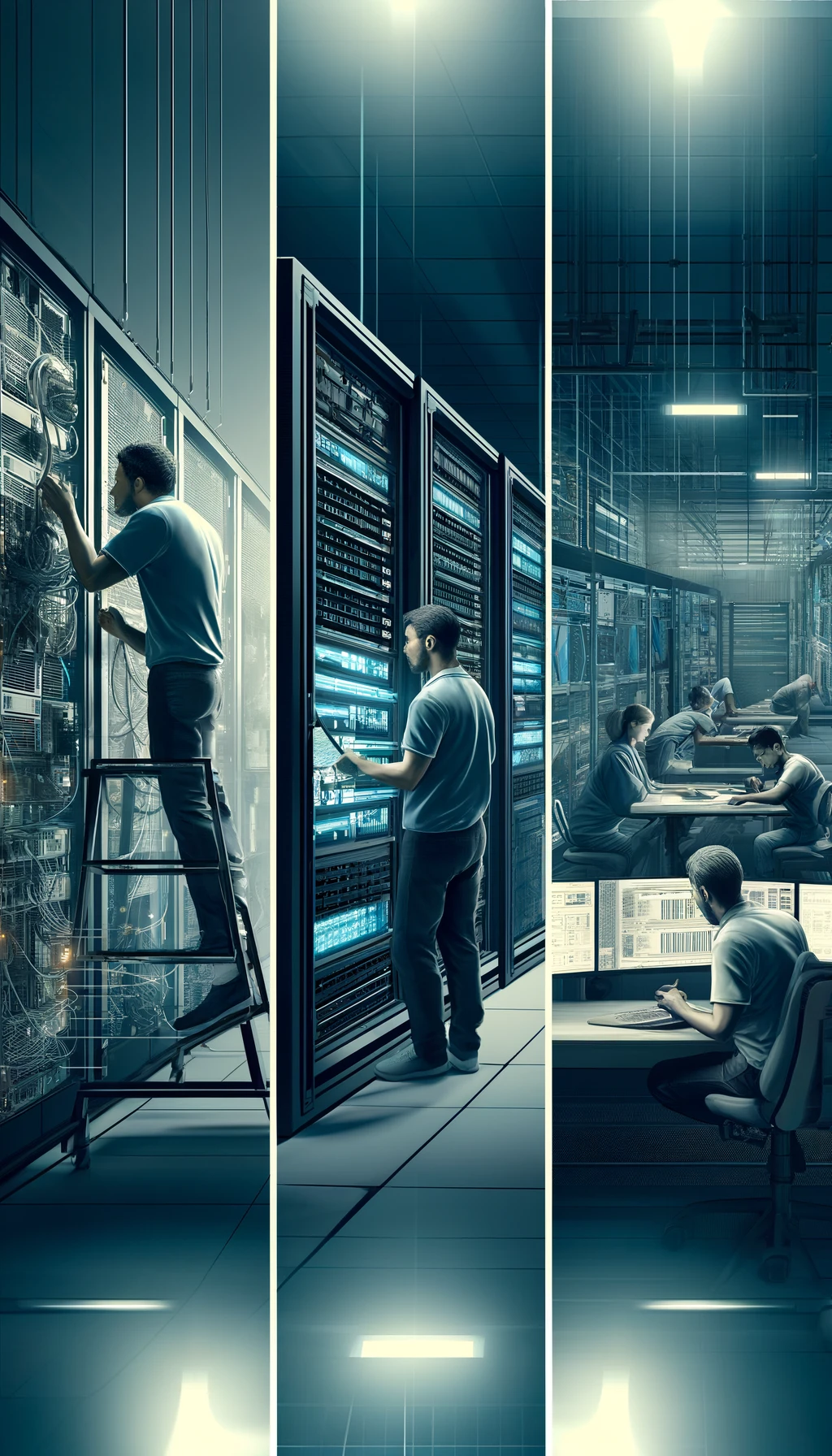
- Strategic Organization: At its core, racking involves the strategic placement of resources in an orderly and accessible manner. In data centers, it refers to the orderly arrangement of servers and network equipment in racks to optimize airflow and ease of maintenance.
- Systematic Layering: Stacking refers to the methodical layering or piling of resources, ensuring that each layer is stable and accessible.
- Scalability and Adaptability: Effective racking and stacking provide the framework for scalability. As demands increase, whether for storage space, data processing, or project complexity, systems that are well-organized from the outset can adapt and expand more efficiently.
- Risk Management: Properly implemented, these practices minimize risks related to damage, data loss, or inefficiencies. For instance, well-designed racking systems in warehouses reduce the risk of injury and product damage.
- Enhanced Efficiency: By optimizing the physical or virtual space, racking and stacking accelerate operations, reduce labor costs, and improve overall efficiency.
Cabiling
Ensuring Efficiency and Connectivity
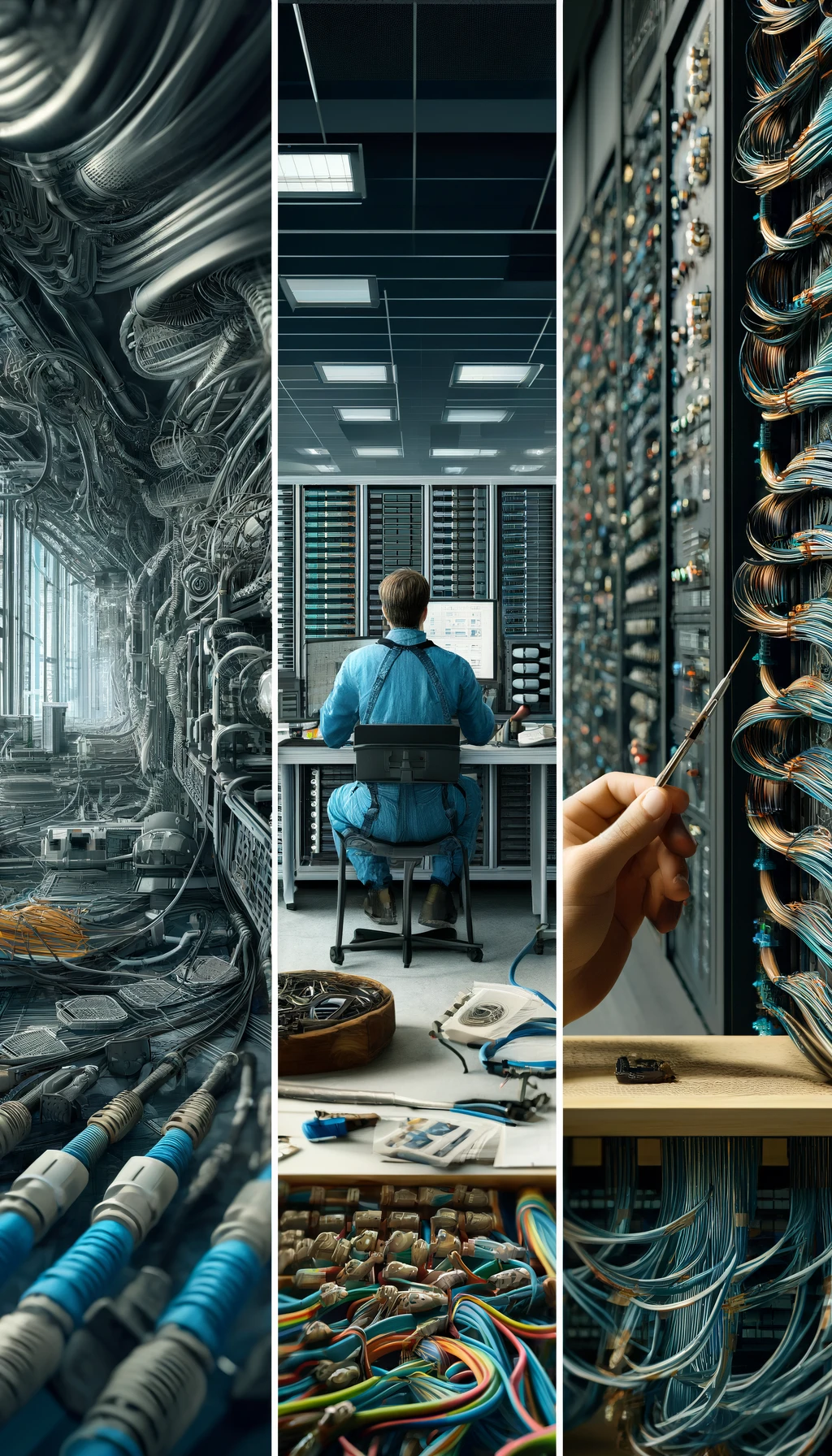
Cabling is a fundamental aspect of modern infrastructure, serving as the nervous system of information and power distribution in various settings, from office buildings to data centers.
Key Aspects of Effective Cabling
Structured Cabling Systems: Providing a methodical way to wire a building or data center in a way that future-proofs the infrastructure.
Types of Cables: Each type has its own characteristics in terms of bandwidth, data transmission speed, interference resistance, and overall performance.
Cable Management: Good cable management improves airflow within racks, which is crucial for maintaining equipment at optimal temperatures.
Compliance and Standards: Adhering to international standards (like ISO/IEC, ANSI, and EIA/TIA) ensures that the cabling infrastructure meets performance requirements and is safe to operate.
Future Scalability: This includes installing additional conduits and choosing cable types that can handle higher data rates to accommodate growth without requiring complete system overhauls.
Decommissioning
Data Center Lifecycle Management
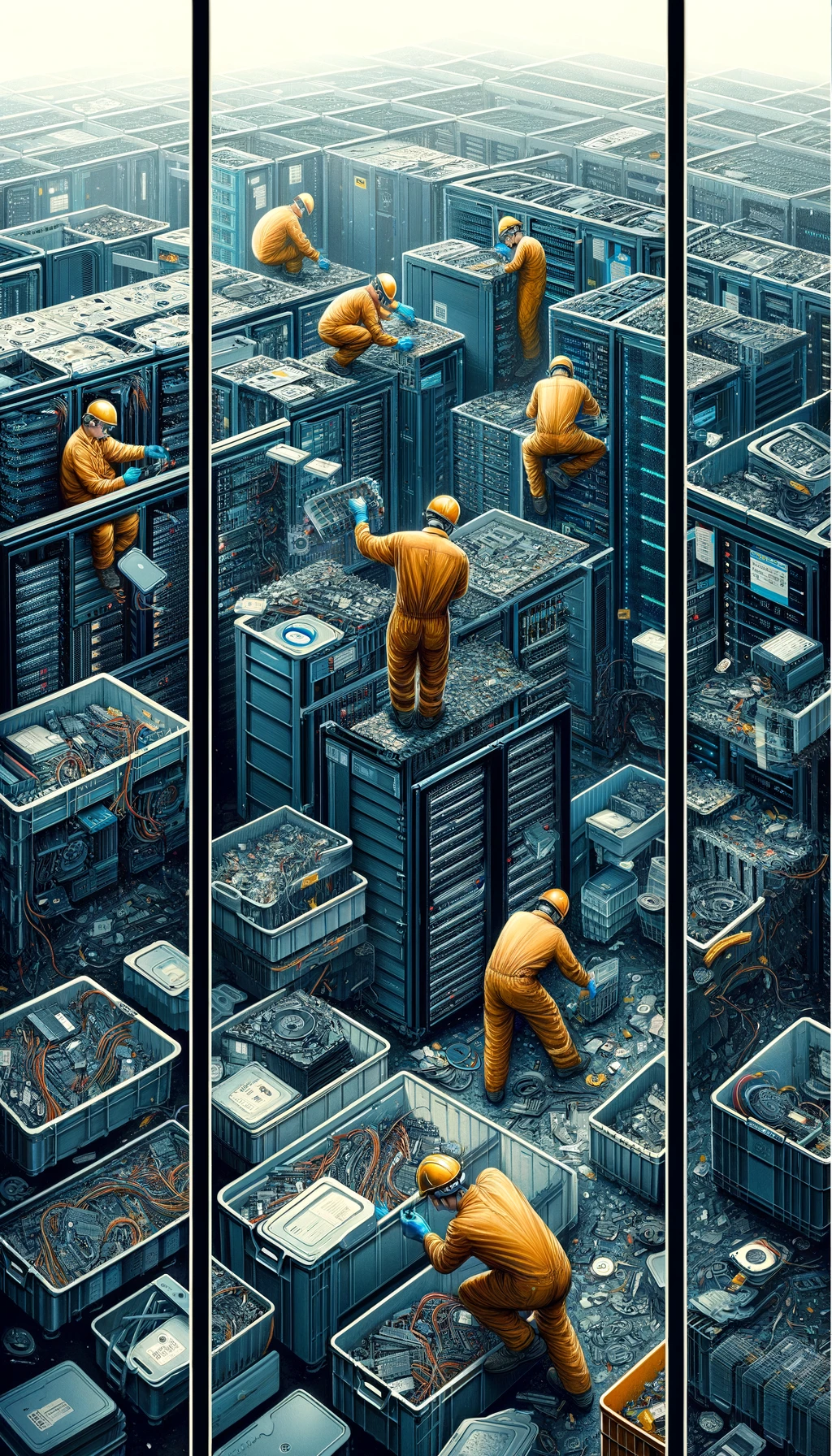
Decommissioning equipment in data centers is an essential but complex process that marks the end of an asset’s lifecycle. Proper decommissioning ensures that data centers can efficiently make room for newer technologies while minimizing the impact on the environment and adhering to data protection laws.
Key Components of Effective Decommissioning:
- Security Protocols: Throughout the decommissioning process, stringent security measures should be maintained to protect the integrity of data and hardware.
- Recycling and Reuse: Decommissioned equipment should be assessed for parts that can be reused or recycled. Components like metals and plastics from servers and networking gear can often be repurposed, helping to reduce e-waste.
- Proper Disposal: For components that cannot be reused, proper disposal methods must be employed to comply with environmental standards, such as responsibly disposing of hazardous materials like batteries and capacitors.
- Adherence to Laws: Different regions have specific regulations governing the disposal of electronic waste. Ensuring compliance with these laws prevents legal repercussions and supports corporate responsibility initiatives.
- Inventory Management: Maintaining a detailed inventory of all decommissioned assets helps in tracking the lifecycle of equipment and planning for future investments.
- Value Recovery: By identifying assets that still hold market value, companies can recover some costs through resale or donations, offsetting the cost of new equipment.
First Line Maintenance (FLM)
Ensuring Immediate and Efficient Issue Resolution
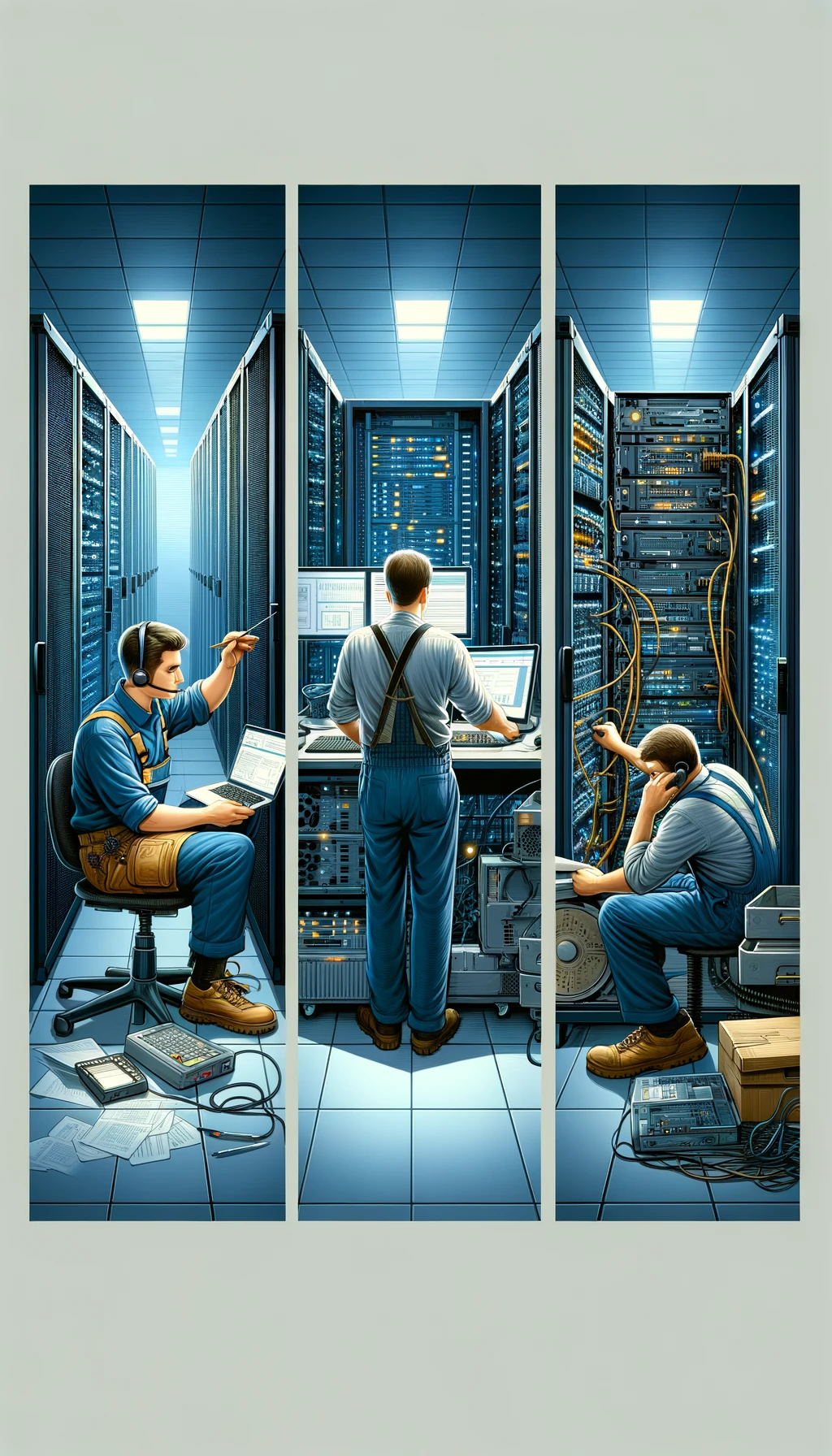
First Line Maintenance refers to the initial level of support provided to address and resolve technical issues in various systems and equipment.
FLM is critical as it forms the first defense against disruptions in services and operations, aiming to quickly restore functionality with minimal impact.
Key Features of First Line Maintenance
- Immediate Response: FLM teams are responsible for providing the first response to reports of faults or issues. This involves assessing the situation, identifying the problem, and attempting an immediate fix if possible.
- Basic Troubleshooting and Repairs: The primary role of FLM is to perform basic troubleshooting and repairs. This could include resetting systems, replacing simple components, or following specific procedures designed to resolve common issues.
- Escalation Procedures: When first-line fixes are not sufficient to resolve an issue, FLM technicians are responsible for escalating the problem to second-line maintenance (SLM) teams who have more specialized expertise. Properly managing this escalation is crucial to ensure timely and effective resolutions.
- Preventive Maintenance: Besides reactive maintenance, FLM often includes routine checks and preventive maintenance tasks to ensure equipment operates reliably and to prevent potential failures before they occur.
- Customer Communication: FLM technicians often interact directly with customers or end-users, providing updates, guidance, and reassurance as they address the reported issues. Effective communication skills are essential to maintain customer satisfaction and trust.
- Documentation and Reporting: Documenting actions taken during maintenance processes is a key part of FLM. This information is crucial for historical data, helps in future troubleshooting, and is used in reports to analyze the performance and reliability of the equipment.